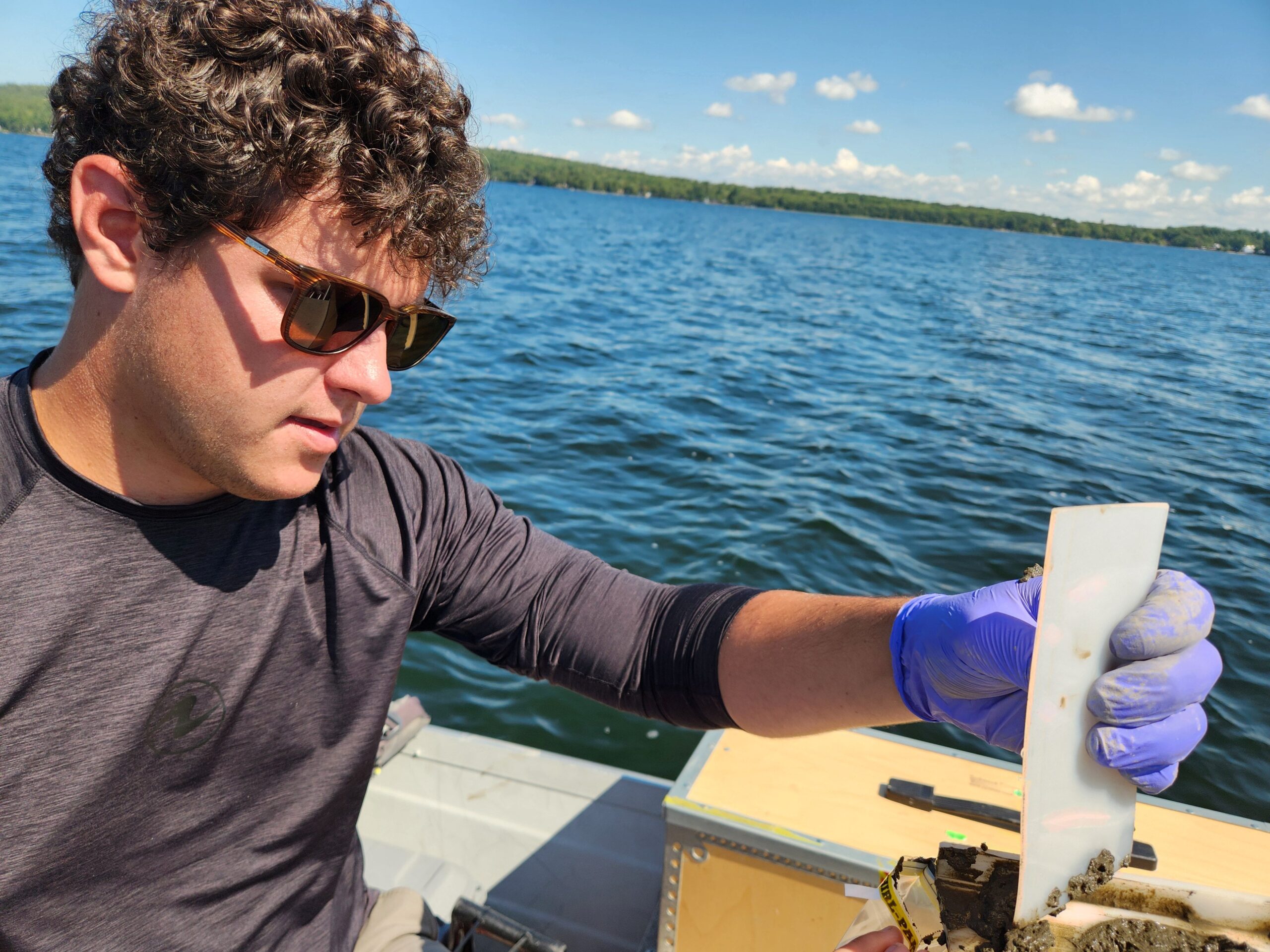
From sample collection to data reporting to summer camp instruction, Miles Hagedorn’s hard work has made an impact on better understanding the drivers of water quality in the Belgrade Lakes watershed.
Impact
Miles concluded his Assistant Lake Scientist position with 7 Lakes Alliance at the end of December 2025. Over the past year and a half, Miles was instrumental in conducting fieldwork, such as collecting water and sediment samples. Miles’s contributions this past year were a part of a massive effort that saw over 200 lake site visits resulting in more 2,500 water samples. Sample records track physical, chemical and biological data that are essential to protecting the lakes and streams of the Belgrade watershed.
Dr. Danielle Wain, 7 Lakes Alliance Lake Science Director shared, “I have really appreciated Miles’s positive attitude and willingness to do whatever work needs to be done.”
In the summer of 2025, Miles was entrusted with helping guide Colby College summer research students – a role he filled quite reliably according to 7 Lakes Alliance Lake Scientist Matt Farragher. Miles also excelled at less glamorous tasks like trudging through streams and culverts and hauling canoes into the woods for remote pond sampling and sediment collecting activities.
Next Steps
Miles, a 2025 Bates College graduate with a degree in Environmental Studies with a concentration in Ecology, plans to continue his career in conservation and is actively pursuing biological fieldwork.
About the 7 Lakes Alliance Lake Science Program
To better understand the drivers of water quality in the Belgrade watershed, the 7 Lakes Alliance, in association with Colby College and surrounding lake associations, conducts water quality monitoring on all seven of the Belgrade Lakes.
Under the supervision of our Lake Science Director, Dr. Danielle Wain, and lake scientist, Matt Farragher, Colby students, 7 Lakes Alliance staff, and volunteers routinely measure temperature and oxygen profiles, Secchi disk depth, and algal species composition (using a FlowCam) to assess the quality of the lakes.
Matt Farragher
Lake Scientist
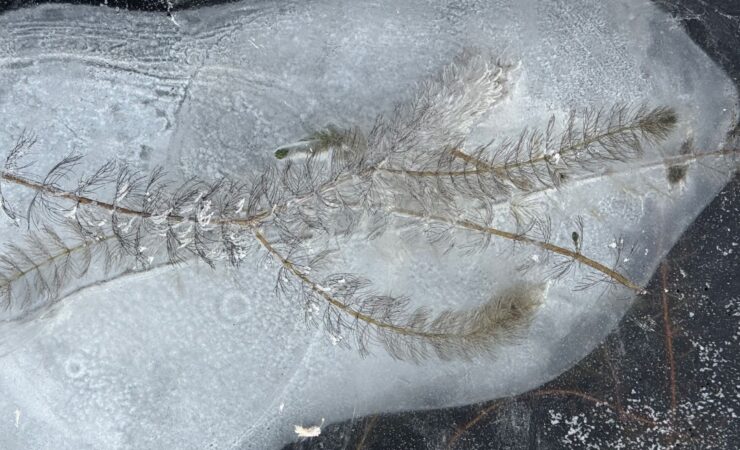
Tips to Protect Our Lakes This Winter
January 20
Aquatic Invasive Species Can Still Spread During Winter The risk of spreading invasive aquatic species between waterbodies doesn’t go away when our lakes ice over. Invasive aquatic plants, like variable-leaf
Keep Reading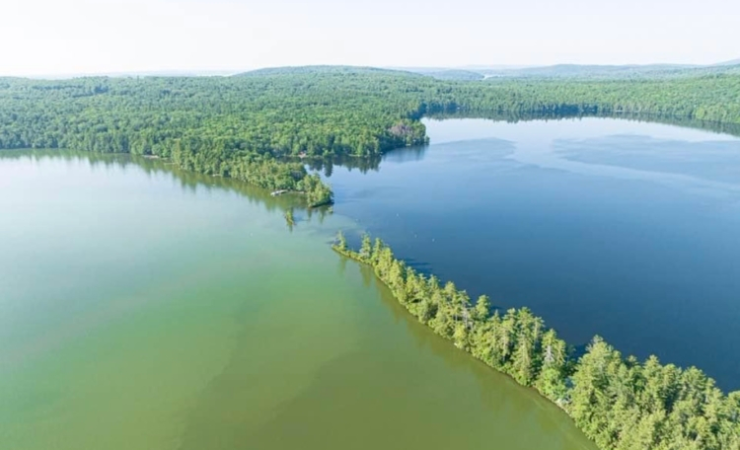
Congressionally Directed Spending Grant Awarded
January 16
7 Lakes Alliance and North Pond Association Awarded $2.35 Million Federal Grant for Clean Water Restoration on North Pond Belgrade Lakes, Maine – 7 Lakes Alliance, in partnership with
Keep Reading
Land Trust Accreditation Renewed
December 18
December 12, 2025 – Belgrade Lakes, ME – 7 Lakes Alliance is proud to announce it successfully renewed its land trust accreditation proving that, as part of a network of over
Keep Reading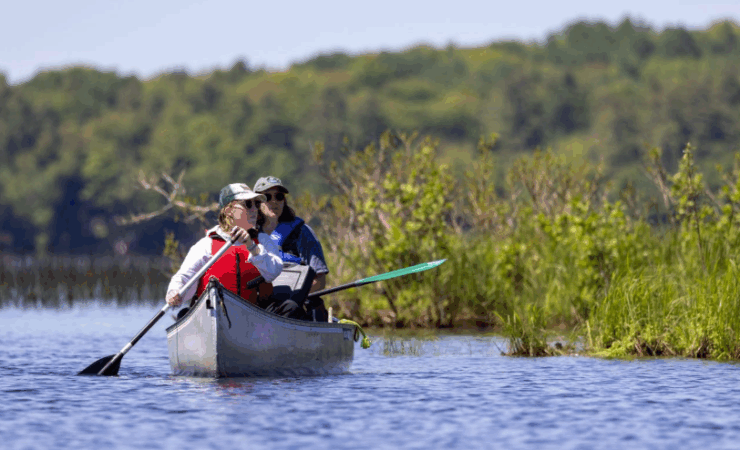
7 Lakes Alliance Receives $4,000 in Funding for Priority Conservation Projects
December 12
December 12, 2025 – Belgrade Lakes, ME – 7 Lakes Alliance has been awarded $4,000 through the L.L.Bean Maine Land Trust Grant Program, which Maine Coast Heritage Trust (MCHT) administers.
Keep Reading
Septic Project Initial Findings
December 9
Learn from Alex Debo, an intern from Maine Geospatial institute (MGI) who shares updates on the septic system modeling project including both technical details and preliminary results. He also
Keep Reading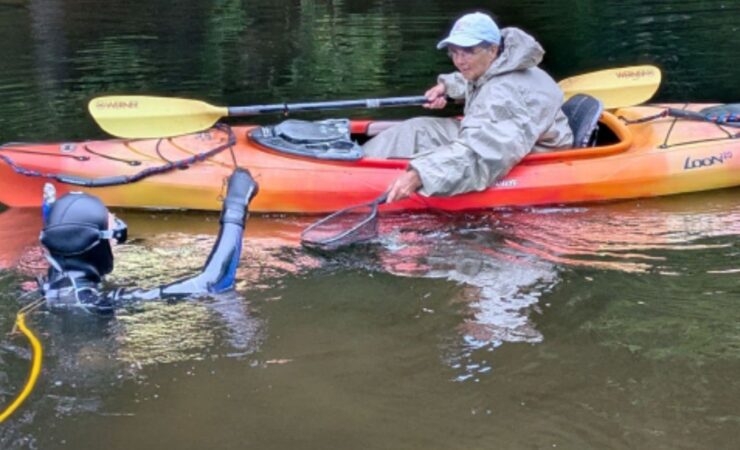
2025 Invasive Aquatics Program Summary
December 4
7 Lakes Alliance leads the charge in preventing, detecting, and managing invasive aquatic species in the Belgrade Lakes watershed. Our robust Invasive Aquatics Program works closely with the Department of
Keep Reading2025 Annual Meeting Recording
October 22
7 Lakes Alliance is the science-based conservation organization for the Belgrade Lakes region of Maine. This presentation shares highlights and accomplishments of our 2025 season to date. Hear from our
Keep Reading
7 Lakes Alliance Seeks YOUR Input: Take our Survey!
August 28
Dear Community Members, 7 Lakes Alliance is embarking on a strategic planning process to guide our work in the years ahead. As part of this effort, we are seeking
Keep Reading