
7 Lakes Alliance is now accepting road improvement project inquiries
To reach our 2026 Clean Water Act Section 319 grant goals, we need to complete 14 road improvement projects in the Messalonskee Lake and Long Pond Watersheds this season.
We invite anyone interested to reach out to Lynn Geiger, 7 Lakes Alliance Erosion Control Policy Manager, to see if your project qualifies for a Cost Share*.
* Grant funds may be used to cover up to 50% of improvement projects (upgrading culverts, ditching, road materials, etc). Funds may not be used for maintenance activities.
Featured Projects
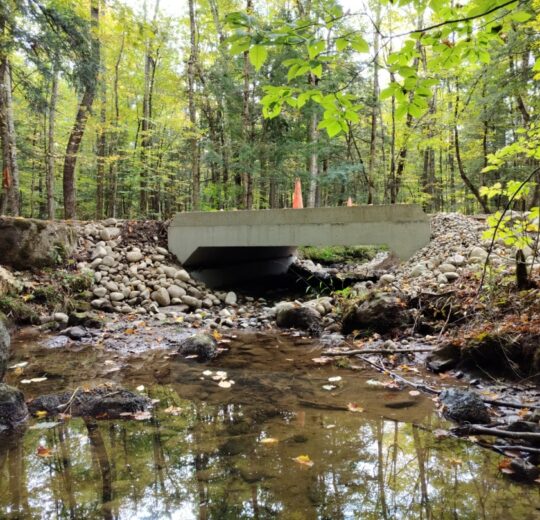
Wanser Stream Crossing
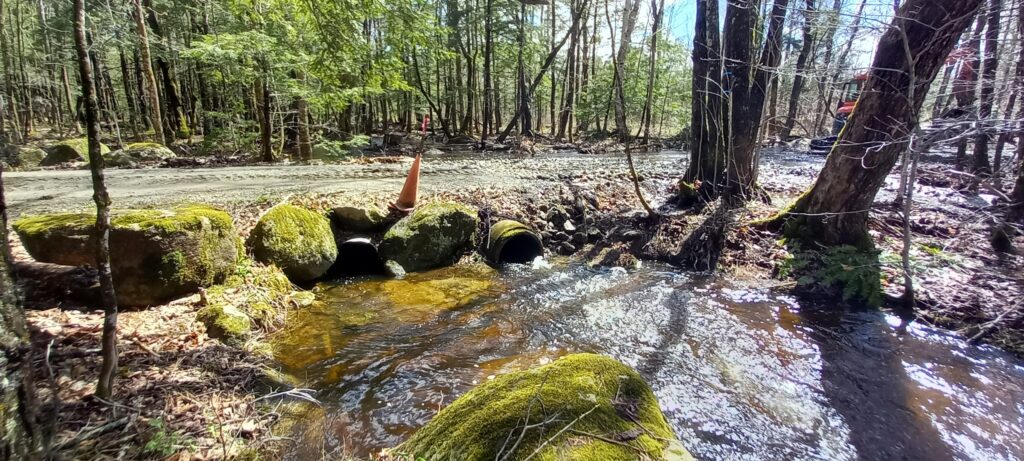
Stream Crossing Before
In 2024, we replaced two undersized culverts on Wanser Lane with a single 10′ bridge as part of the Great Pond Watershed Restoration Project (Phase II). The stream had overtopped and washed out the road several times in the past few years, depositing yards of road material in the forest flood plain. Because the stream flows directly into Great Pond, it was a high priority to upgrade the road crossing. Now the stream can act like a stream, fish have easy access upstream, and the road doesn’t wash out during large rain events.
Road Before
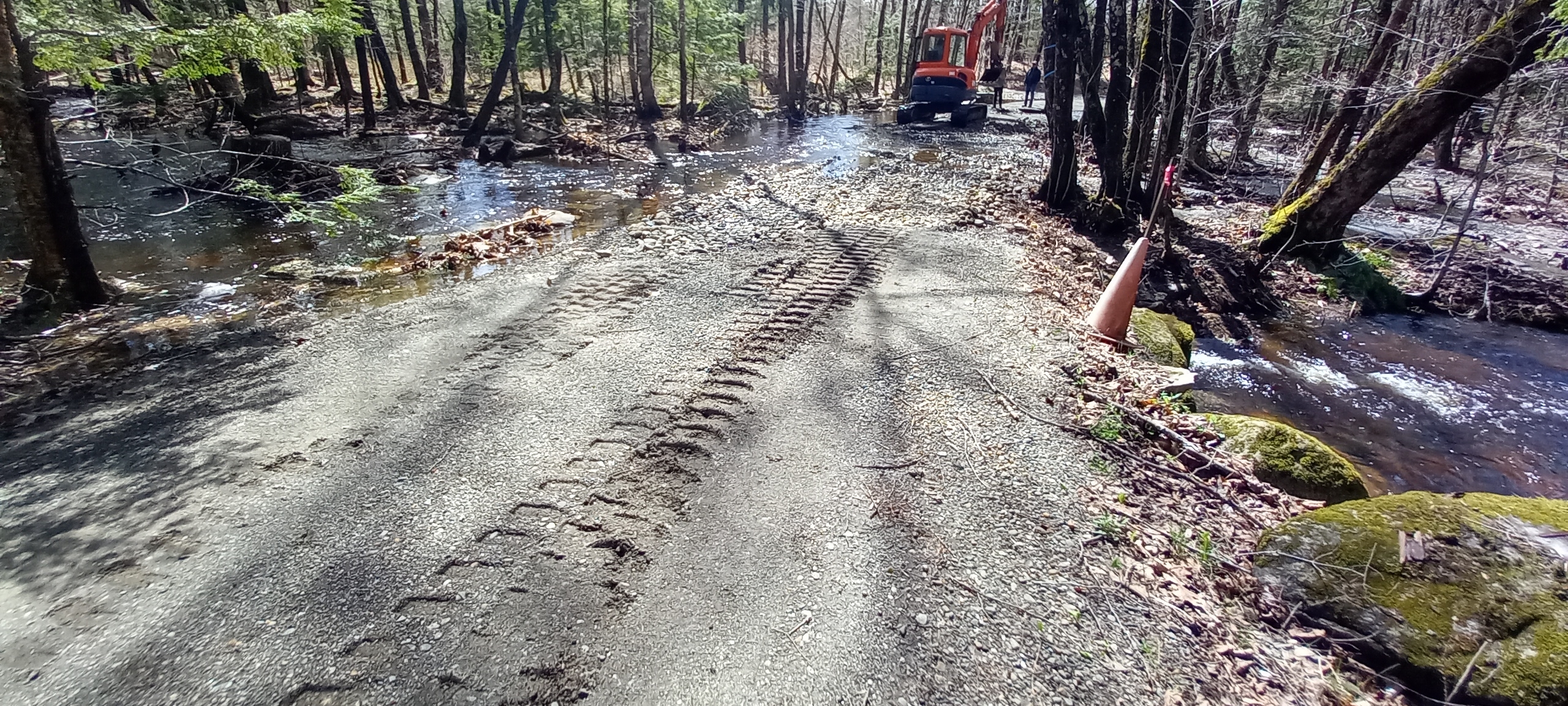
Road After
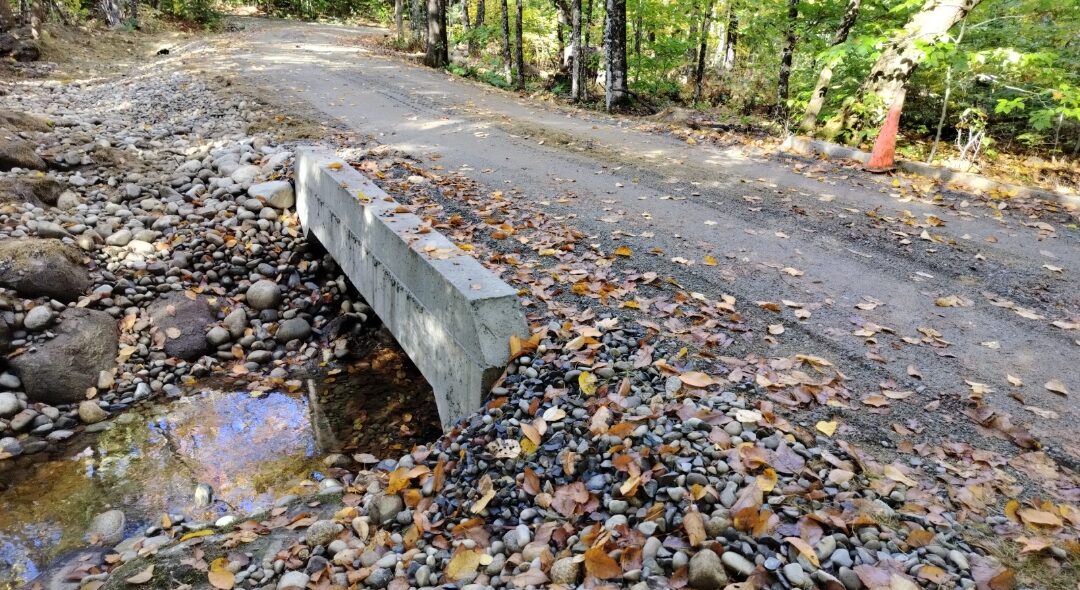
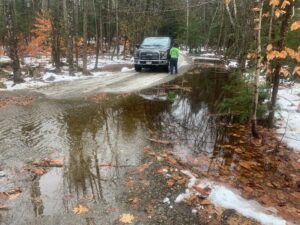
December 2023 Storm
When a culvert does not have enough capacity to handle large rain events, water on the uphill side will rise until it finds a low point in the road to flow over. In this case, the most damage occurred almost 350 feet away! The undersized stream crossing was the linchpin that caused a downhill drainage culvert to wash out and send yards of material into the woods. We replaced that second culvert with a larger one at the same time. It can be more cost effective to have a contractor complete multiple projects in the same area – you don’t have to pay mobilization cost twice.
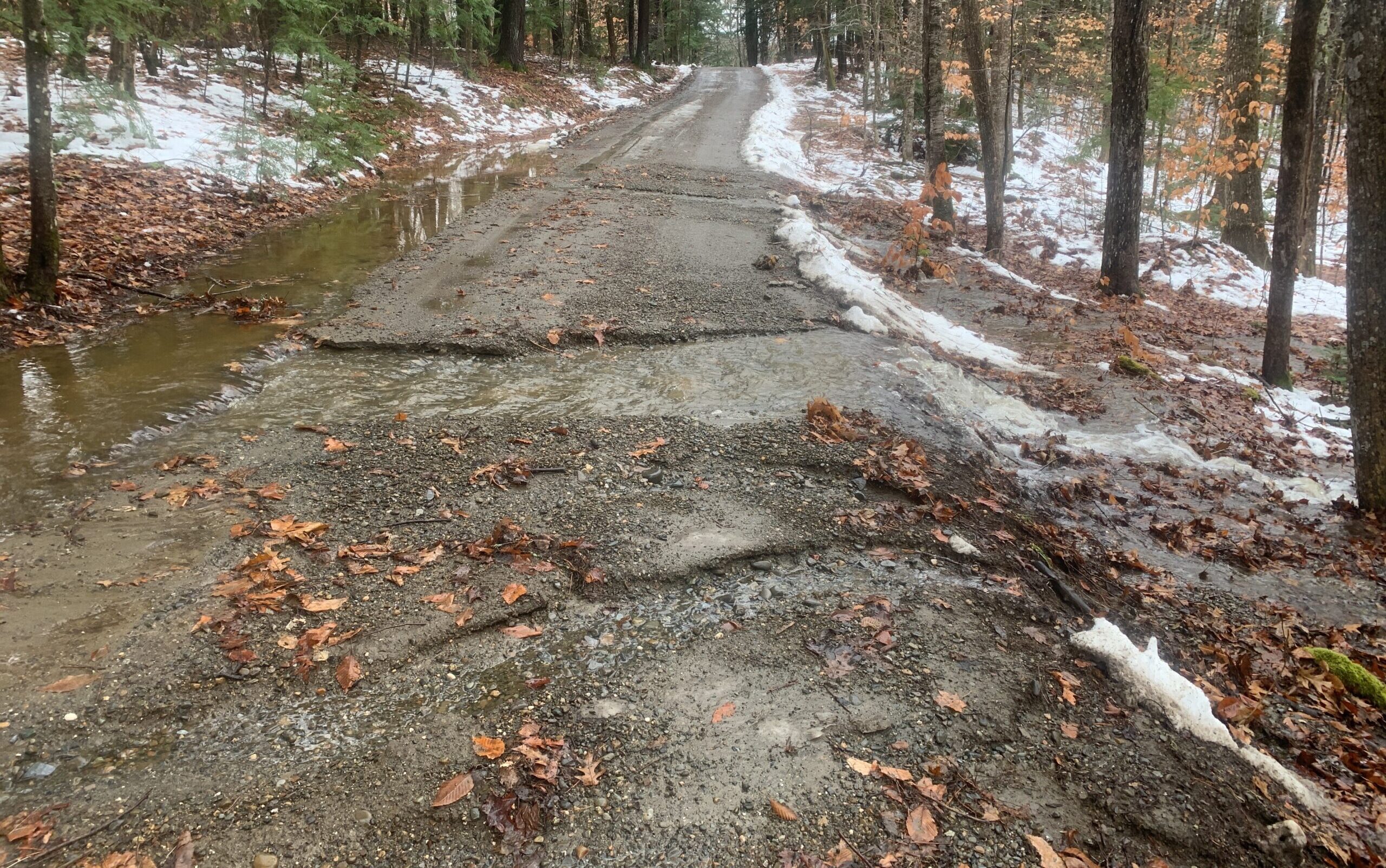 Downhill culvert failure
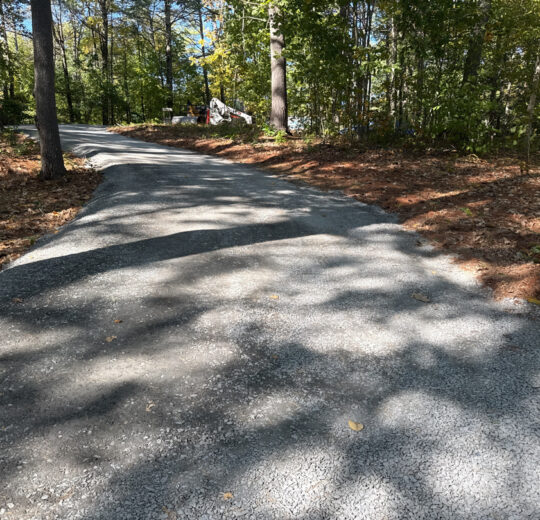
Messalonskee Driveway Improvement
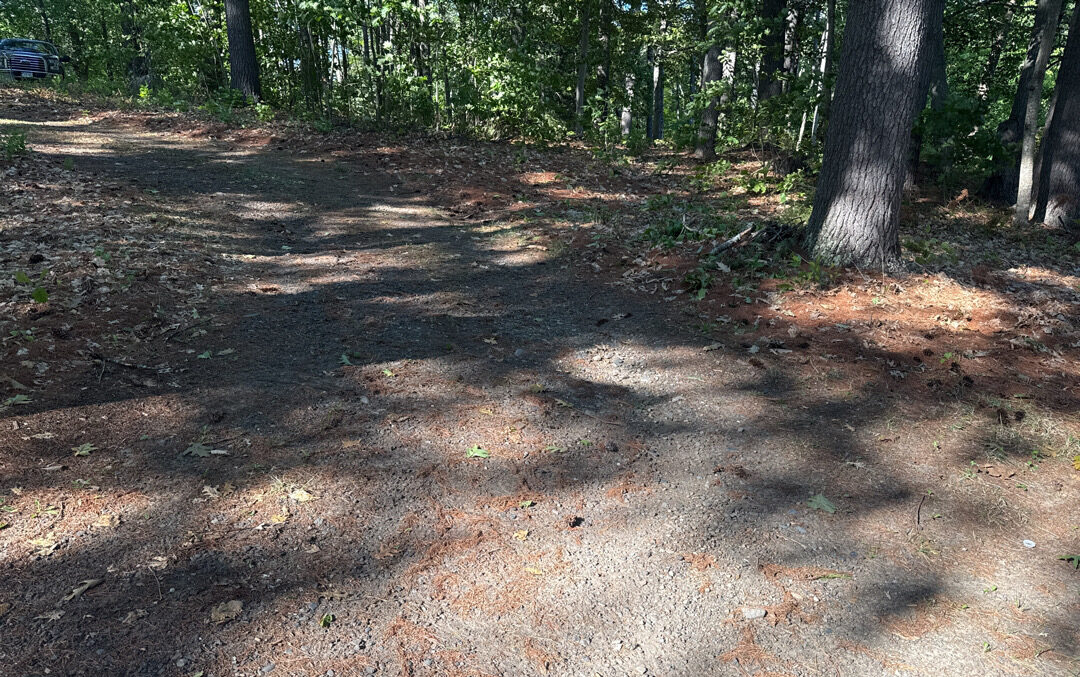
This driveway was upgraded in 2025, as part of the Messalonskee Lake Watershed Protection Project Phase (III). Like many driveways around Messalonskee, this one was on a steep hill.
The driveway surface was lower than the shoulders, which funnels runoff downhill and into the lake. To solve this issue, we elevated and crowned the driveway, so it would shed water. We installed a berm at the edge of the parking area to divert water into the forest (where it will infiltrate) and resurfaced the driveway with crushed bluestone gravel, which is much more durable than the original material.
Water diverter berm

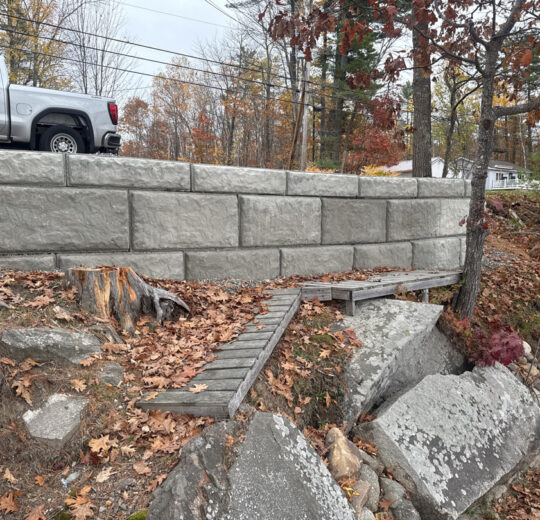
North Pond Retaining Wall
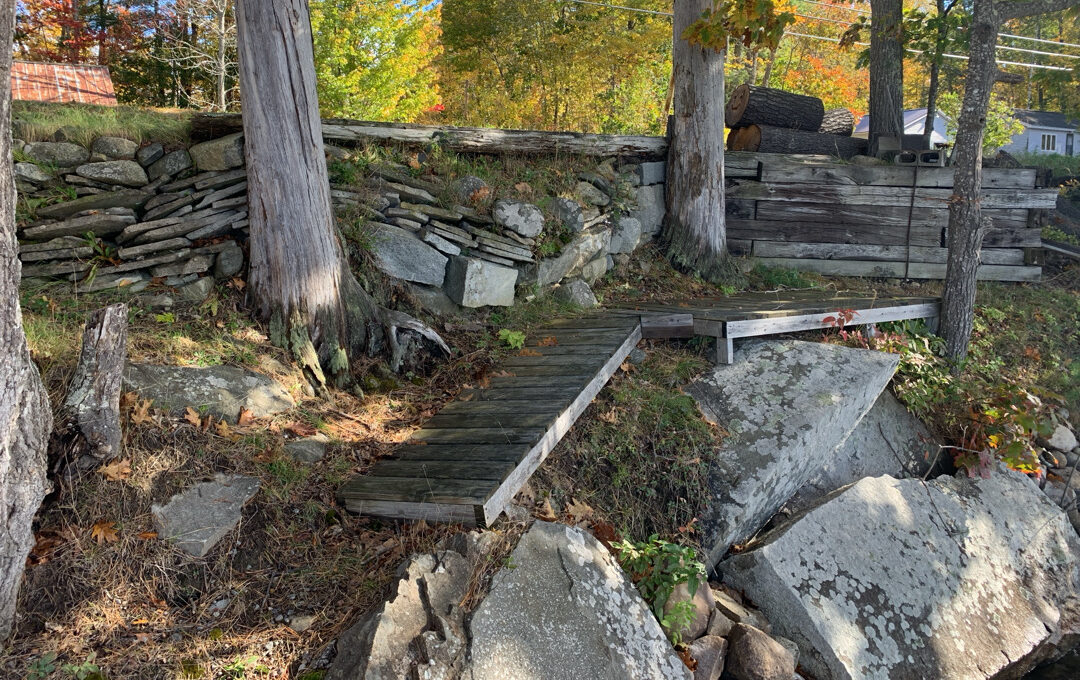
Retaining Wall Before
Construction Photos
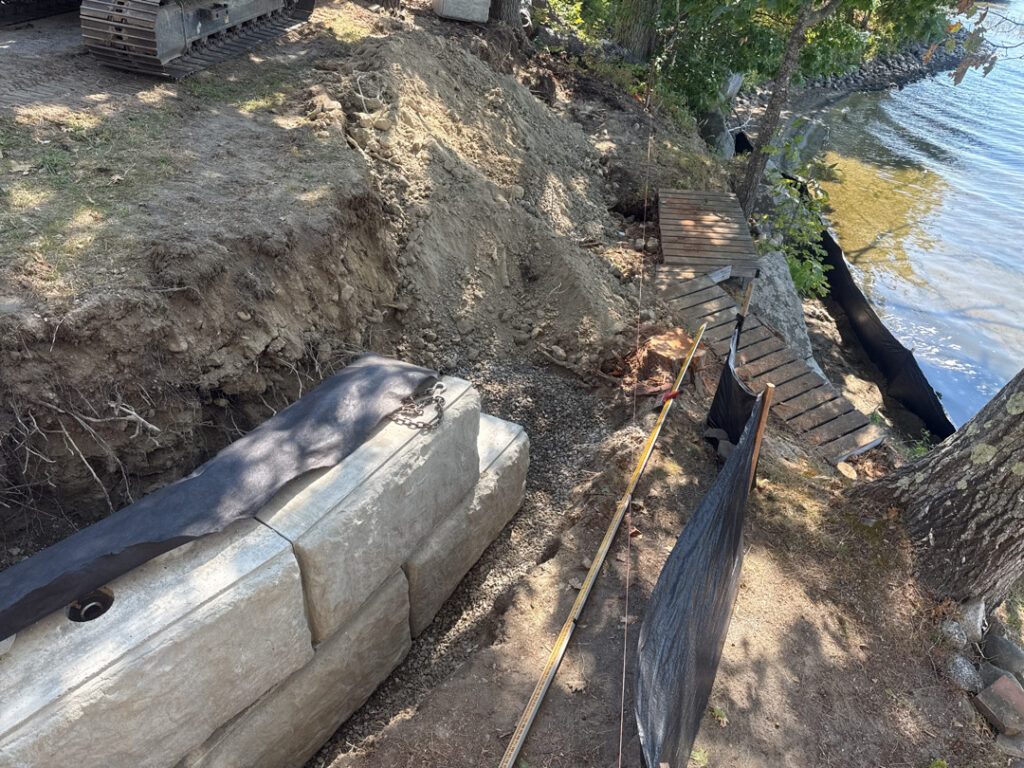
The construction team had to time removing the old structure and installing the replacement blocks between rain events, to prevent the exposed dirt from washing into North Pond. Luckily, we had a dry summer.
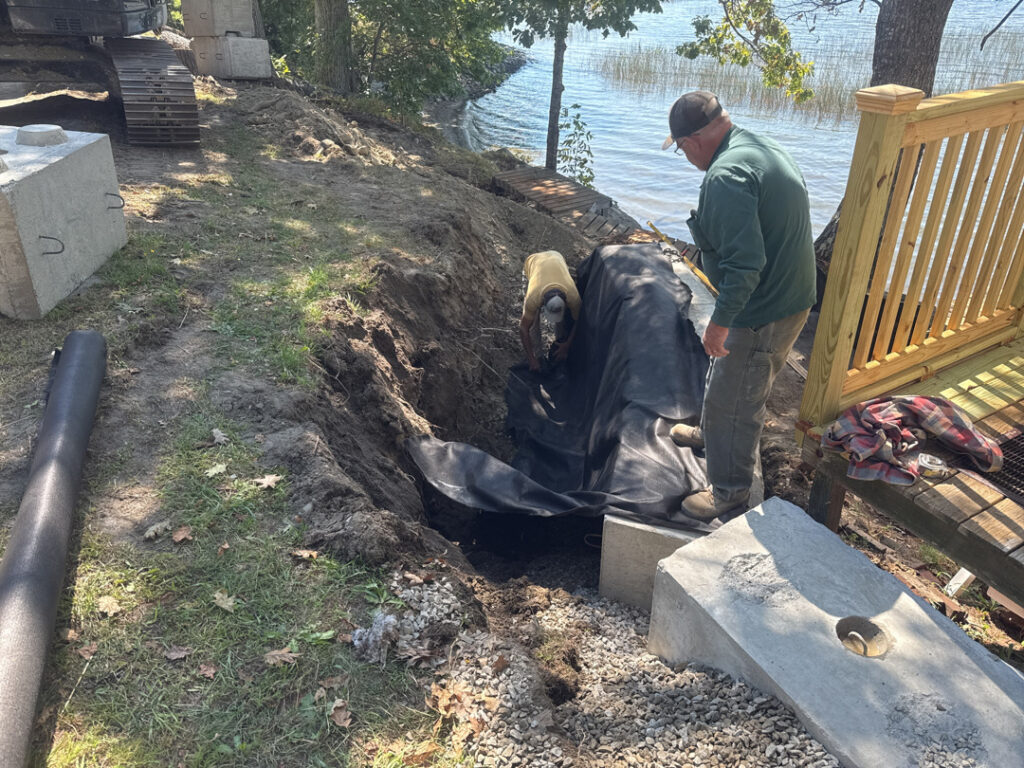
Installing geotextile allows water to drain while preventing the stone place on top from sinking into the mud. Proper drainage is crucial to relieve the added pressure of water caught behind the wall.
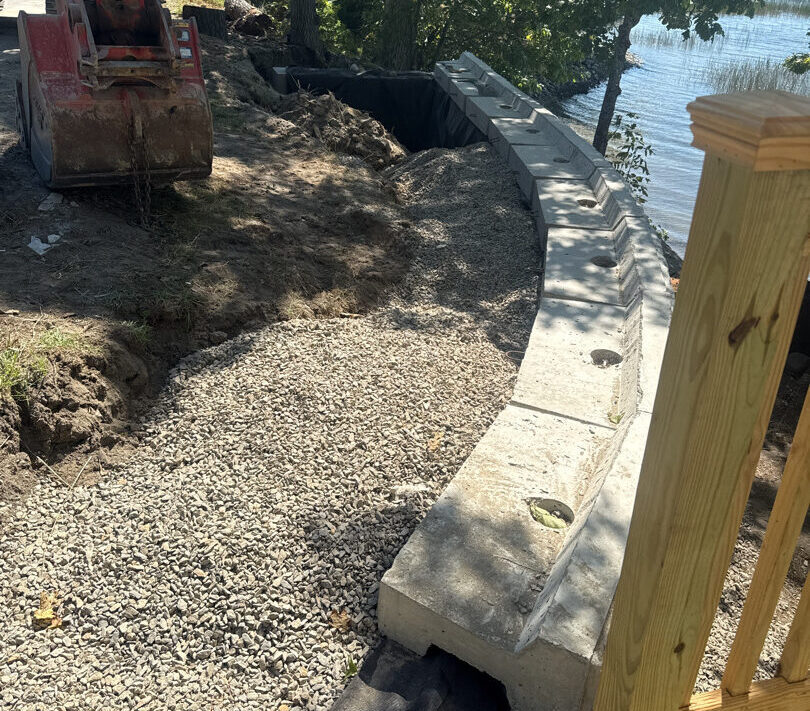
Stone is used to backfill the retaining wall, because it has a much higher permeability than the native soil. Permeability is the rate at which water flows through media)
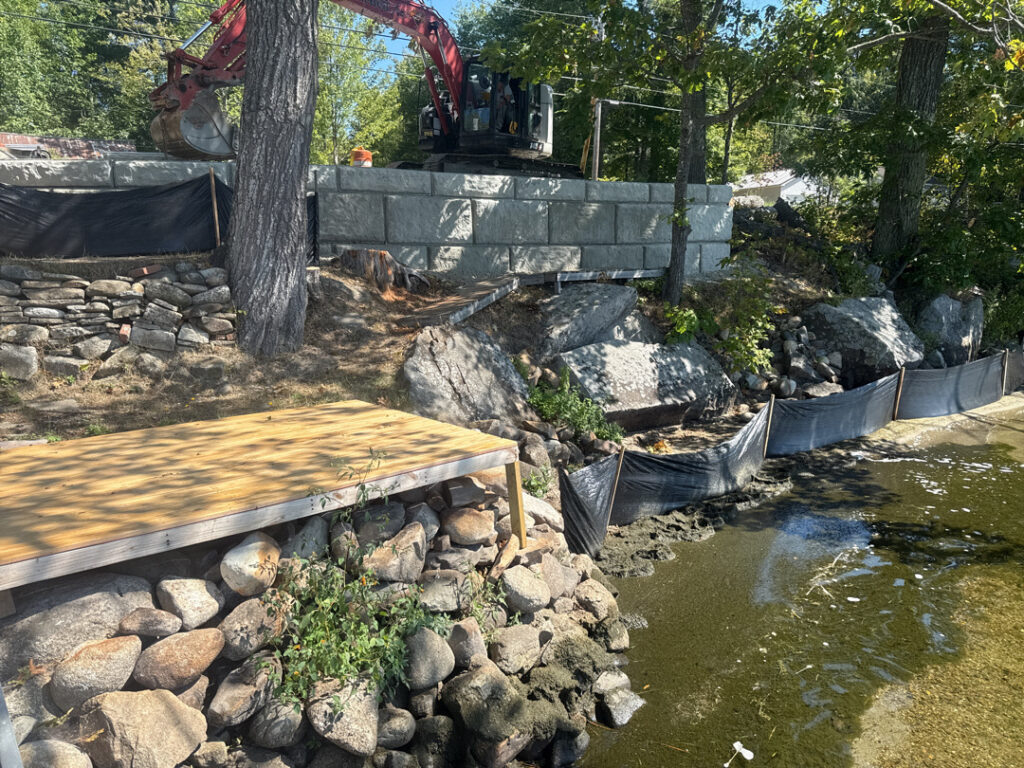
Black silt fences are installed before any construction begins to catch any mobilized sediment before it reaches the lake. They remain in place until all loose sediment is stabilized and all bare dirt is covered (by seed and hay, or mulch)
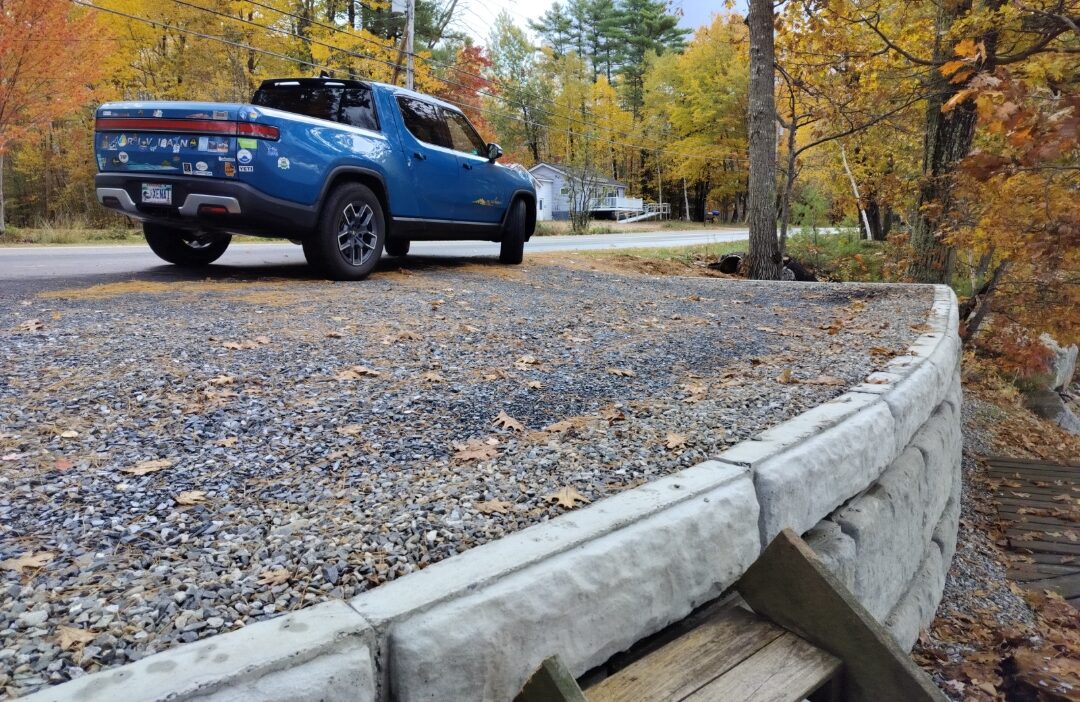
Finished Retaining Wall with Stable Parking Area
Types of Road Projects
Culverts
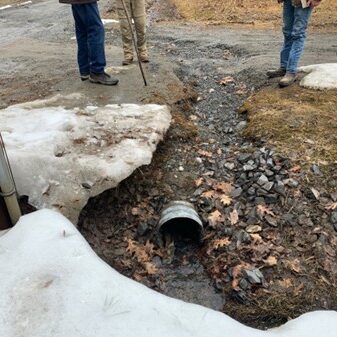
Culvert upgrades are our most common project. Culverts can be undersized, crushed, perched, heaved, too short, rusted out, unstable, or too infrequent. Any of those issues are valid for a 319 project.
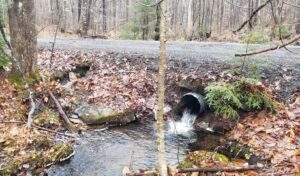
Perched Culvert (note the waterfall). This causes erosion at the outlet called scour
Example Project: Near the end of Foster Lane, a new culvert was installed to help drain a low spot that had recently started washing over the road during heavy rain events.
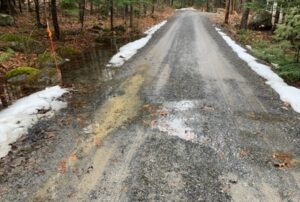
Foster Lane – Before
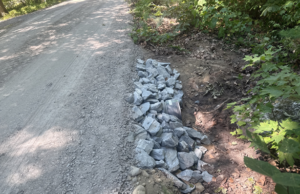
Foster Lane – After.
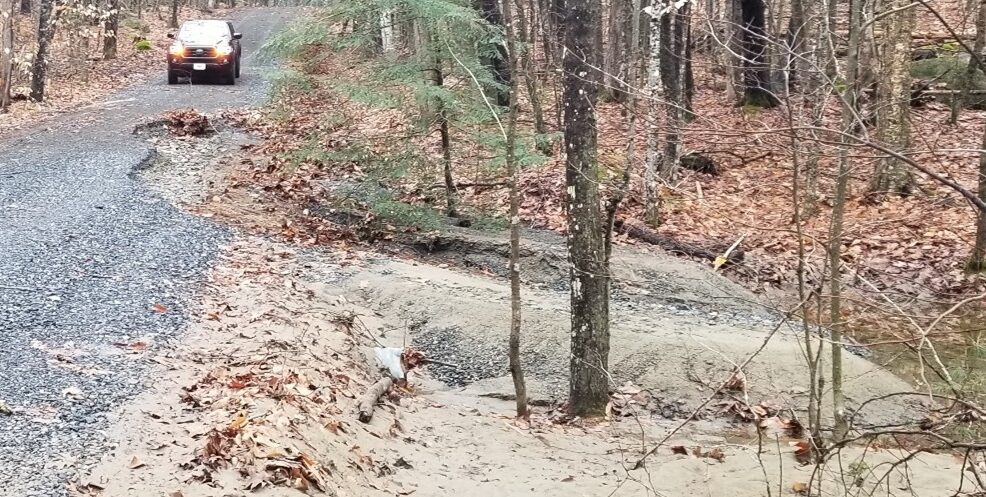
Granite Estates Washout – due to a lack of capacity
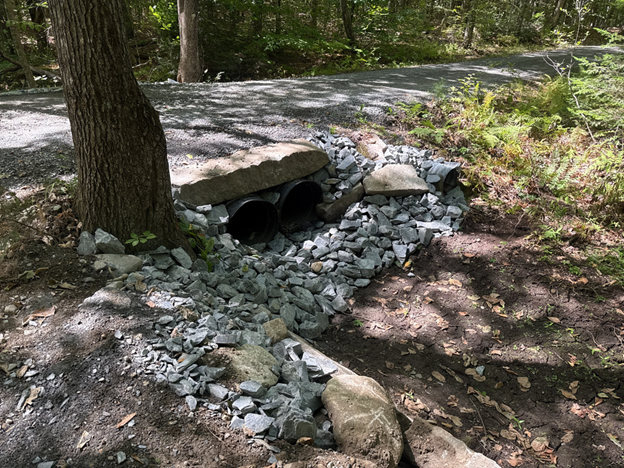
Granite Estates – After. Larger culverts were added to increase capacity

Road Surface Improvement
A gravel road should be made of crushed gravel (not dirt). Crushed gravel locks together better than bank run gravel. We prefer to use Bluestone gravel, it is very durable and low in phosphorus.
The driving surface of a road should always be higher than it’s shoulders. Roads need to be able to shed water, if there is nowhere for the water to go, it will collect on the road. On a slope, it will cause severe erosion. On a flat, it will create potholes and/or mud.
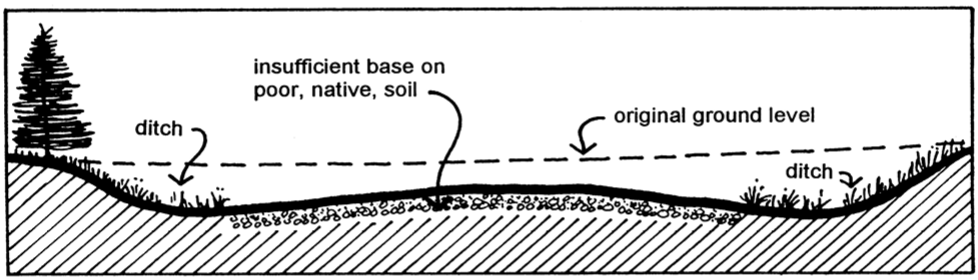
Poorly Constructed Road.
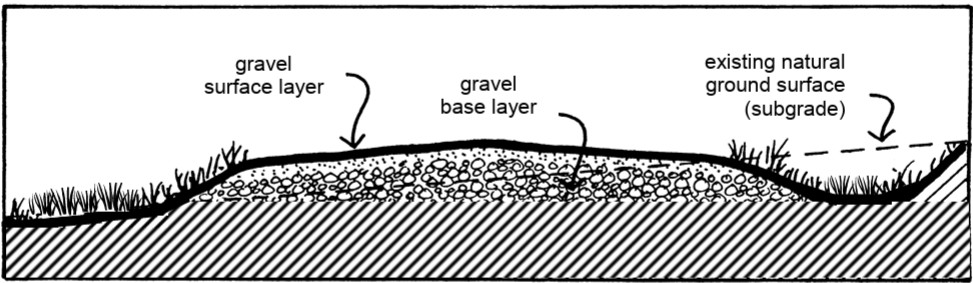
Well constructed road. Taken from the Maine Gravel Road Maintenance Manual developed by the Maine DEP & Kennebec County Soil and Water Conservation District.
Example Projects:
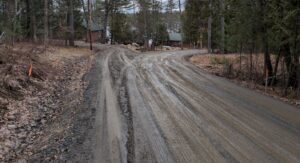
Sunny Shore – Before
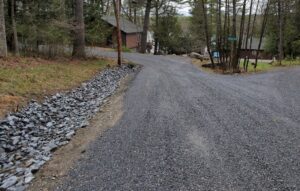
Sunny Shore – After
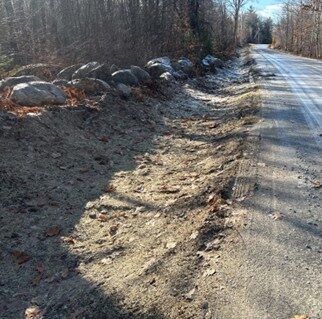
Ditching
Ditches catch and transport road run-off. If a ditch does not have enough capacity, stormwater can overtop the road and cause serious erosion. A proper ditch should have a U-shaped bottom and should not intercept the ground water table. If a ditch slope is greater than 5%, it would benefit from stone armoring.
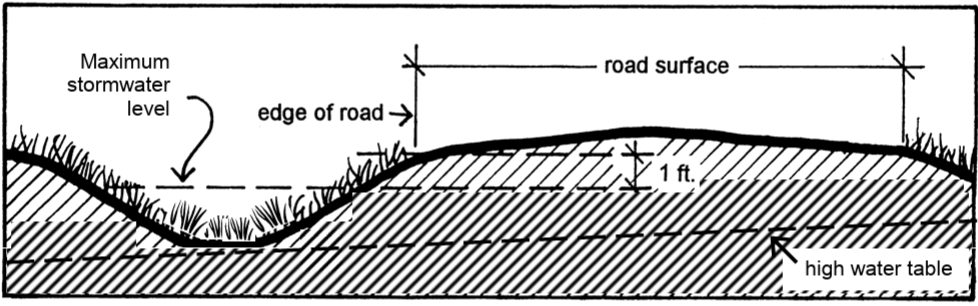
Proper ditch construction. Taken from the Maine Gravel Road Maintenance Manual developed by the Maine DEP & Kennebec County Soil and Water Conservation District.
Example Ditching Projects:
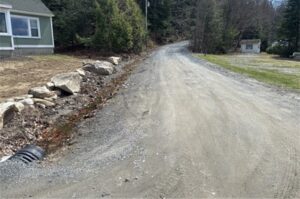
Crystal Spring Lane – Before
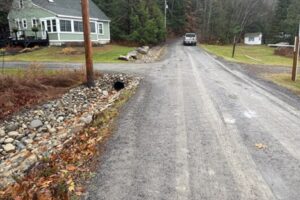
Crystal Spring Lane – After
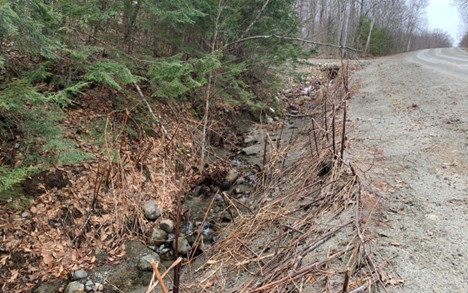
Sand Hill – Before
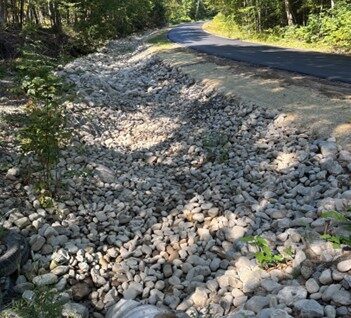
Sand Hill – After
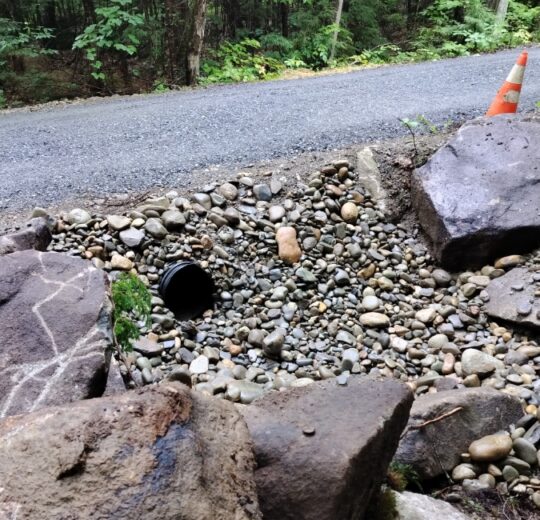
Rock Sandwich
Rock Sandwiches are a technique for passing water under a road, using geotexile fabric (the bread) and cobble sized stones (the filling). The layer of large stones has a lot of connected pore space (the voids between stones) that allows water to flow through the road. The fabric keeps the mud and dirt below the road from filling in the pore space. In this example, we included a culvert to help pass water during high flow events.
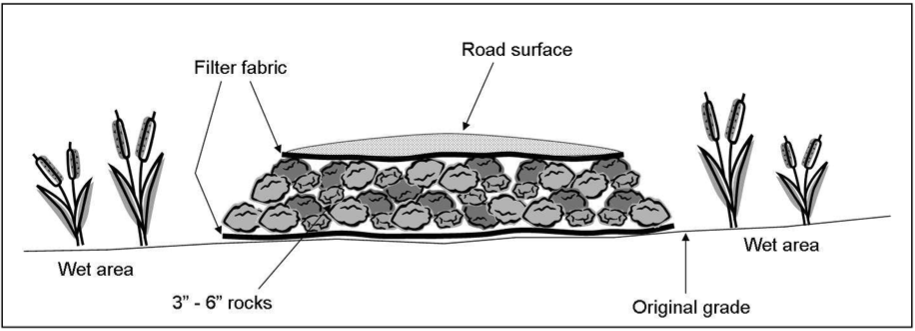
Diagram of a Rock Sandwich. Taken from the Maine Gravel Road Maintenance Manual developed by the Maine DEP & Kennebec County Soil and Water Conservation District.