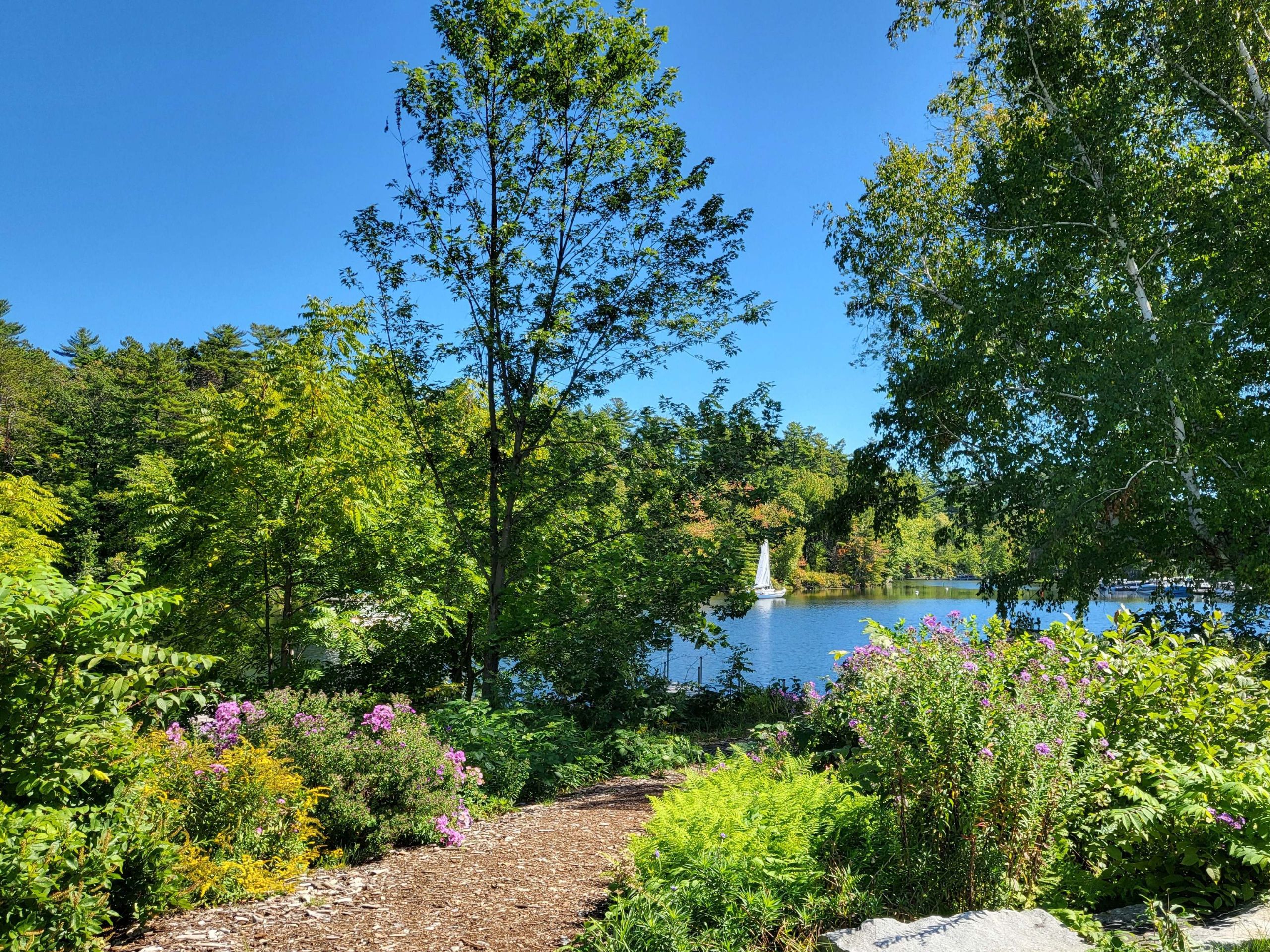
Exemplary Erosion Control Mulch Path and Vegetative Buffer
What we do on land affects the lake
Runoff (rainwater that doesn’t soak into the ground) carries pollutants with it, from pet waste to road salt to dirt. Soil, aka dirt, contains nutrients like phosphorus and nitrogen, which cause algal blooms when there’s too much. Protecting our lakes requires reducing the amount of runoff and sediment that enters waterbodies.
The further runoff travels, the more momentum and energy it picks up (like the proverbial snowball rolling down a hill), increasing its erosive potential. To reduce erosion and nutrients entering the lake, we need to reduce runoff. The easiest and most efficient way to reduce runoff is to keep it from forming. The runoff management mantra is: Slow it down, Spread it out, Soak it In.
Landowners can use a variety of strategies to reduce runoff and erosion, even if the property is not on the shoreline.
5 Strategies to Reduce Runoff and Erosion
- Intercept rain drops: An uninterrupted raindrop hits the ground at 20mph. Tree canopies and shrubs impede raindrops and reduce their impact on soil.
- Manage roof runoff: Place a rain barrel or drywell at the downspout. No gutters, no problem – add crushed stone or an infiltration trench along the dripline. This method is good for the environment and stops dirt from splattering on the side of your camp.
- Interrupt the flow: Catchment basins, like rain gardens, intercept flowing runoff and prevent the area downhill from eroding. Swales and berms (lumpy terrain) also break up the flow of runoff and dissipate energy.
- Minimize impervious surfaces: Install permeable pathways. They give rain more places to soak into the ground. Gravel driveways and parking areas are also considered impervious, don’t install more than you need.
- Plant vegetative buffers: Shoreline buffers act as the last line of defense to slow and capture runoff. Buffer root systems hold the dirt in place, strengthen the shoreline, and decrease erosion. Native plants have more extensive root systems than ornamental plants. For example, little bluestem roots can grow over 5 feet deep.
Crazy about managing runoff

Dripline Infiltration Trench
The 7 Lakes Erosion Control Team is crazy about managing runoff. In fact, our Youth Conservation Corps has installed nearly 500 erosion and runoff control practices on 264 properties since 2021. YCC’s primary focus is reducing sources of pollution in our lakes through. The installation of lake shore erosion control projects or Best Management Practices (BMP) supports this goal.
BMP’s installed include rain gardens, armored ditches, infiltration steps, shoreline buffers, dripline infiltration trenches, and dry wells. YCC is a low-cost option for landowners seeking to protect their properties from erosion and reduce the amount of pollution entering our lakes.
The 7 Lakes Erosion Control team will hosts a suite of erosion mitigation and planting events this summer. Visit the 7 Lakes event page for more info.
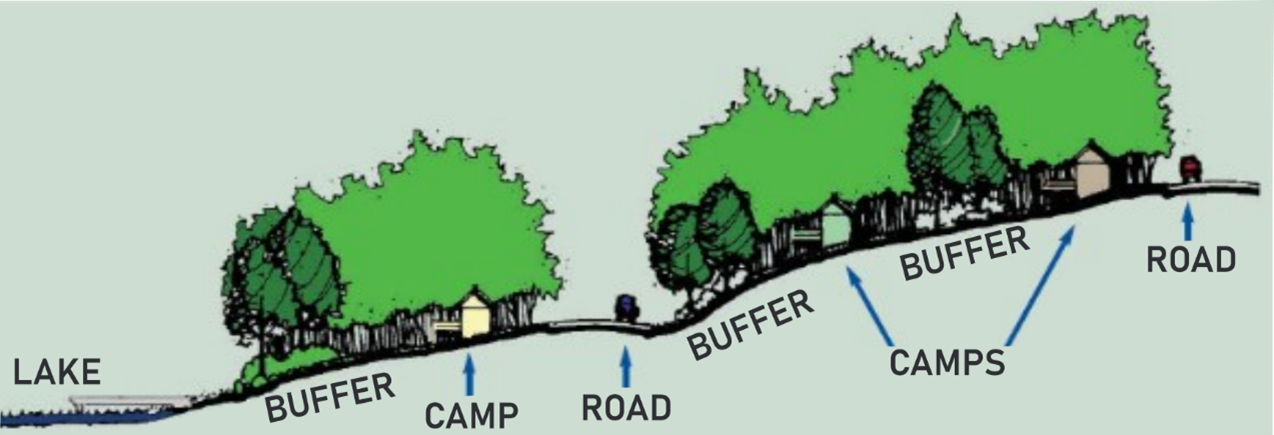
You don’t need to live on the waters to protect water quality. Buffers downhill from homes and roads filter pollutants from upland areas.
Contact 7 Lakes Alliance to learn more about watershed management strategies that will work on your property.
Lynn Geiger
7 Lakes Alliance
Building Community at Hog Island Audubon Camp
September 29
Learn about Community Engagement Coordinator Sally Whittington’s experience at Hog Island Audubon Camp.
Keep Reading
2026 Annual Meeting Recap
September 15
Highlights from this year’s Annual Meeting included a conservation update from President and CEO Chris Monz and a financial report presented by Treasurer Tom McCandlish. The meeting concluded with a
Keep Reading7 Lakes Alliance Leadership Update
September 14
7 Lakes Alliance Leadership Update 7 Lakes Alliance would like to thank President and CEO Dr. Christopher Monz as he leaves the organization. The widespread recognition of 7
Keep Reading
Don’t Be That Boater
August 28
Update from Sharon Mann, 7 Lakes Alliance Invasive Aquatics Diretcor August 28, 2026 Recently, I paddled down Great Meadow Stream to conduct a routine survey for the few remaining, scattered
Keep Reading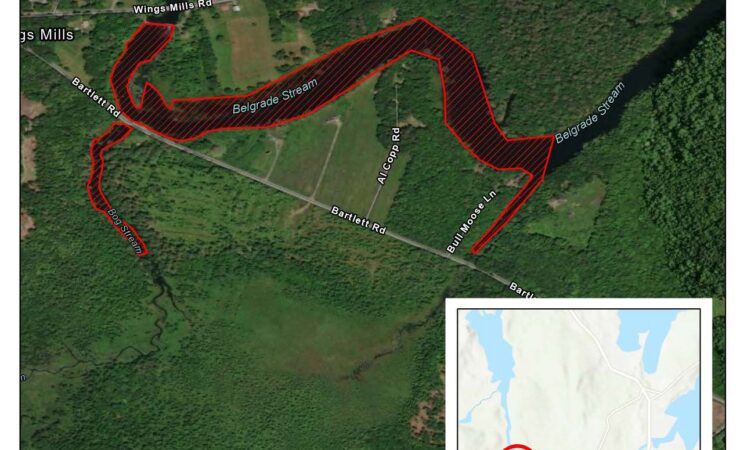
The Start of Something Good
August 25
We are pleased to share that on August 31, a small portion of Belgrade Stream will be treated with a low-risk herbicide to reduce invasive variable-leaf milfoil, lower the risk
Keep Reading
The Importance of Clean, Drain, Dry
July 22
Maine’s lakes and rivers are public waters, providing everyone with the opportunity to enjoy boating, fishing, swimming, and paddling. With that privilege comes a shared responsibility to protect these waters
Keep Reading
What Kind of Algae Is That?
July 10
Algae Update Summer 2026 So far, the lakes have remained nice and clear during the latest heatwave, but we are starting to see a measurable increase in algae growth. Not
Keep Reading
Remembering Kathi Wall
June 26
It is with great sadness that we share the passing of Kathi Wall, founding Executive Director of the Maine Lakes Resource Center, the organization whose merger with the Belgrade Regional
Keep Reading