Maine has a long history of keeping records of ice coverage. For example, Lakes Auburn, Moosehead, Sebago, Damariscotta, Cobbossee, have ice-on and ice-out records dating back to 1850 or earlier. “Ice-on” refers to the date when ice has covered an entire lake, and “ice-out” indicates when the ice has thawed enough to navigate through open water across the entire lake.
Ice Coverage Comparison
Determining ice-on and ice-out dates can be subjective (partial versus full ice coverage, multiple freezes and thaws early and late in the season), but long-term analyses of these records show that lakes across the northern hemisphere have later ice-on and earlier ice-out dates now than they did in previous years. The change in dates is two weeks on average, which corresponds to our (on average) shorter winters.
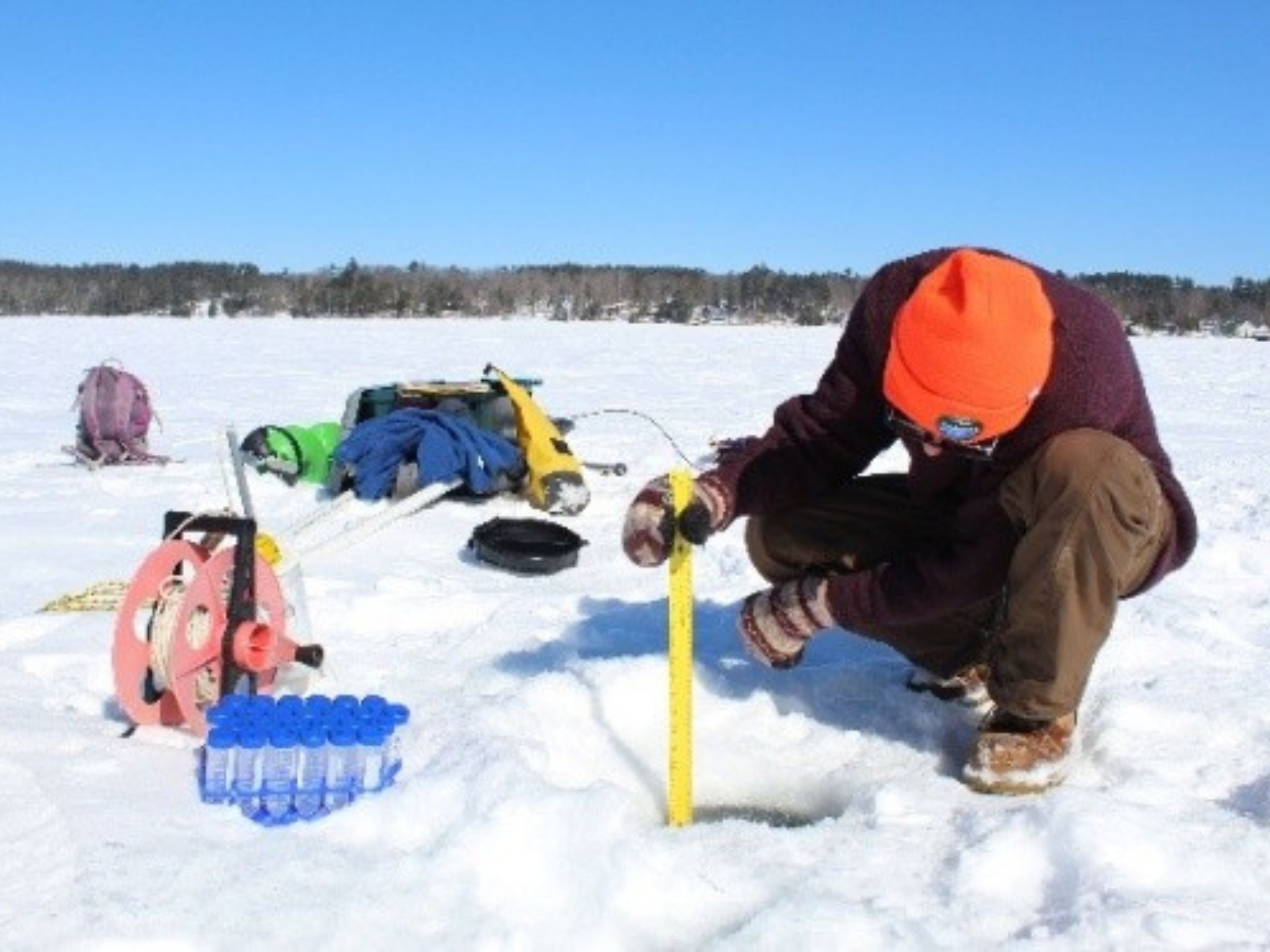
After a decently long and cold winter (depending on who you ask or how many Maine winters you have experienced), we’re now awaiting ice-out. While we prepare the boats for the open water season, here’s a look at how this year’s ice coverage measures up to the past. Keep in mind measurements were recorded at the water quality monitoring stations. Ice thickness varies across lakes, some coves had 30+ inches this winter!
Ice thickness
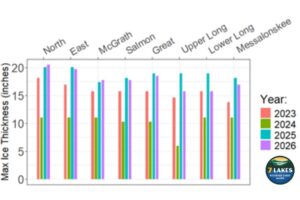
Panel: Ice thickness of lakes in the Belgrade watershed from 2023-2036 (measured at water quality monitoring stations).
Why Tracking Matters
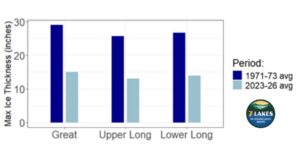
Measuring the thickness and color of ice is the best way to assess ice strength. Black ice is the strongest ice as it contains very few air bubbles and is formed when calm water freezes. White ice is formed when snow and slush partially melt and re-freeze, which traps air bubbles, making white ice less sturdy. There are fewer records of ice thickness on lakes in Maine compared to ice-on and ice-off dates, however, some historic data from the early 1970’s shows that we have much less ice now than we did 50 years ago.
Comparing ice thickness
The graph shows measurements by Davis (1978) of 28 to 30 inches in the 1970’s on Great and Long Ponds compared to 10 to 15 inches in recent years. Looking closer at the last three winters, we can see how variable ice conditions can be. Lake ice measured by 7 Lakes Alliance staff grew to between 15 and 20 inches in 2023, 2025, and 2026, but only 5 to 10 inches in 2024 when we had a very late ice-on date.
Keeping track of ice thickness, ice-on, and ice-out helps us understand how these pastimes could be impacted in the future. We hope you enjoyed the lakes this winter whether you were out fishing, skating, or admiring them from a distance.
If you have questions about data referenced in this article, please contact Lake Scientist Matt Farragher or stop by the 7 Lakes Alliance office. Happy Mud Season!
Email Matt Farragher

Matt Farragher
Lake Scientist
Reforestation: Protecting the Watershed One Tree at a Time
March 27
7 Lakes Alliance is slated to begin a reforestation project on the Dunn Road Conservation Area in Belgrade in late April. Around 500 trees will be planted with the goal
Keep Reading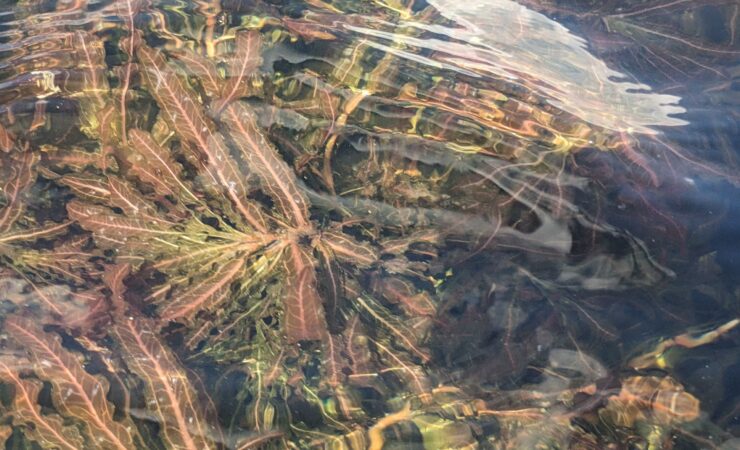
Ice-Out, Curly-In
March 27
As the ice melts and the lakes open up, curly-leaf pondweed (CLPW) begins its rapid rise to the surface, forming dense mats that block sunlight from reaching plants lower in
Keep Reading
Long Term Funding to Protect Maine’s Lakes On the Line
March 18
Urge legislators to support LD 2141 to protect Maine’s lakes The Maine Legislature has an opportunity to protect the water quality of our lakes and the long-term viability of farmland.
Keep Reading
5 Watershed Strategies for Landowners
February 26
What we do on land affects the lake Runoff (rainwater that doesn’t soak into the ground) carries pollutants with it, from pet waste to road salt to dirt. Soil, aka
Keep Reading
Mind The Posthole: Winter Hiking Etiquette
February 19
Winter is a great time to go outside, and it often requires a bit of extra preparation. Whether navigating on foot, skis, snowmobile or fat-tire bike, we all share the
Keep Reading
Invasive Aquatics Looks at Life Under Ice
February 19
During the North Pond Association’s Annual Pike Derby on February 15, our Invasive Aquatics team hit the ice for two reasons: to share Clean, Drain, Dry practices with anglers and
Keep Reading
Thank You, Miles: Assistant Lake Scientist Moving On
January 21
From sample collection to data reporting to summer camp instruction, Miles Hagedorn’s hard work has made an impact on better understanding the drivers of water quality in the Belgrade Lakes
Keep Reading
Tips to Protect Our Lakes This Winter
January 20
Aquatic Invasive Species Can Still Spread During Winter The risk of spreading invasive aquatic species between waterbodies doesn’t go away when our lakes ice over. Invasive aquatic plants, like variable-leaf
Keep Reading