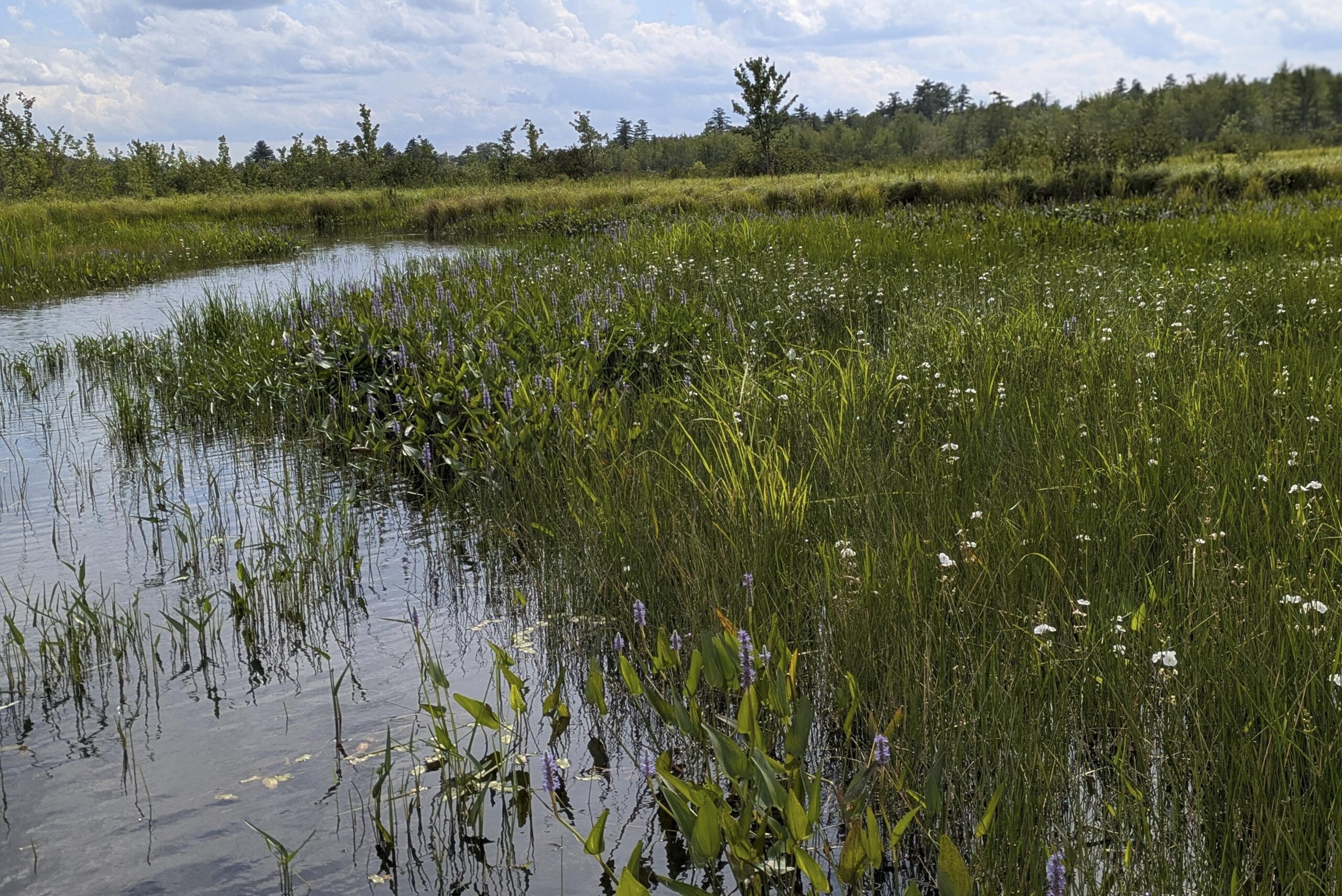
European Frog-bit tucked between the reeds and wetland plants.
Update from Sharon Mann, 7 Lakes Alliance Invasive Aquatics Diretcor
August 28, 2026
Recently, I paddled down Great Meadow Stream to conduct a routine survey for the few remaining, scattered plants of invasive variable-leaf milfoil. The stream looks absolutely stunning right now. The water is crystal clear allowing the impressive stands of flatstem pondweed to shine through. The juvenile fishes are swarming in and out of the native pondweeds. And the bees are busily extracting nectar from flowering arrowhead and pickerelweed. The plants have speckled the stream banks with white and purple in the most impressive display I have seen since becoming a part of this community. Among the flowers and deep in the marsh I spotted something new: a small heart shaped lily pad that I have not seen in Great Meadow Stream yet. My immediate response is “hello, cutie, who are you?”
An Unwelcome Discovery
Head in the clouds and filled with whimsy from the beautiful surroundings, I quickly snapped back to reality. This new species is not a friend, its name is European Frogbit, and it is an invasive species in North America. After the initial shock, I proceeded through the seven stages of grief, lingering particularly on anger. 7 Lakes Alliance and its partners spent sixteen years restoring Great Meadow Stream. Our team and partners invested thousands of hours, millions of dollars, and an enormous amount of passion into this project. And yet, a new invasive species was introduced. Who could have been so careless, so thoughtless, to bring a new threat into this sacred space?
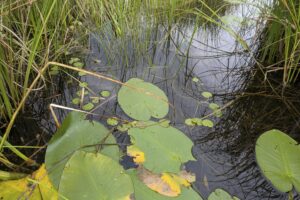
European Frog-bit scattered among the Spatterdock and reeds in Great Meadow Stream.
Then came acceptance. It takes only one boater who fails to inspect equipment to start a whole new infestation. European Frogbit is in a handful of water bodies in the Cobbossee Watershed. Although we don’t know for sure, it is likely someone visiting Cobbossee picked up the plant on their equipment before coming to the Belgrade Lakes Watershed. So far, we have found and removed only a small amount of Frogbit, about three gallons. The areas where we have identified the plant are located at the southern end of Great Meadow Stream, a very popular destination for bass fishing. Since the plants were found far from public boat access points, it is likely the plants were on unseen equipment such as an anchor or fishing line.
We will not know the extent of the damage to Great Meadow Stream immediately. This species produces turions, a type of winterbud,which new growth emerges from in the spring. While we removed all the Frogbit found thus far, we do not know how many turions lie in wait.
What We Do Know
7 Lakes Alliance is here for the long run. The 7 Lakes Invasive Aquatics team will continue surveying Great Meadow Stream and removing invasive aquatic species. One new discovery does not erase sixteen years of restoration work. We are not giving up on this remarkable place.
Skipping a self-inspection can cause real harm. Clean, Drain, Dry is not just a slogan. It is one of the simplest actions everyone can take to protect the waters we all love. Inspect your boat and equipment. Remove every plant fragment. Drain every compartment. Clean your gear. Let it dry before entering another waterbody.
Sharon Mann
Invasive Aquatics Director
The Start of Something Good
August 25
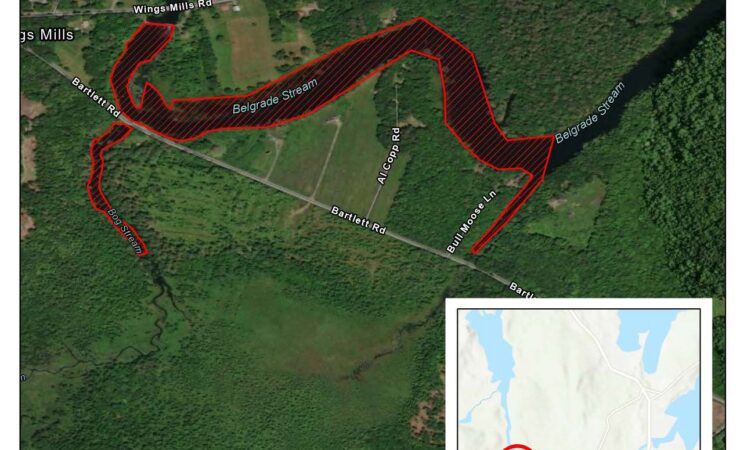
We are pleased to share that on August 31, a small portion of Belgrade Stream will be treated with a low-risk herbicide to reduce invasive variable-leaf milfoil, lower the risk
Keep Reading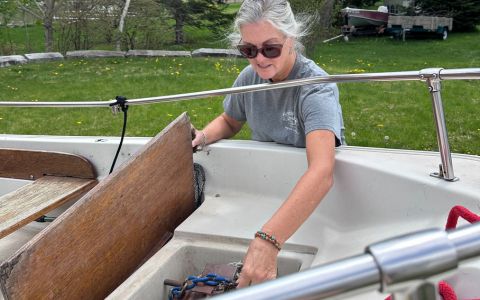
The Importance of Clean, Drain, Dry
July 22
Maine’s lakes and rivers are public waters, providing everyone with the opportunity to enjoy boating, fishing, swimming, and paddling. With that privilege comes a shared responsibility to protect these waters
Keep Reading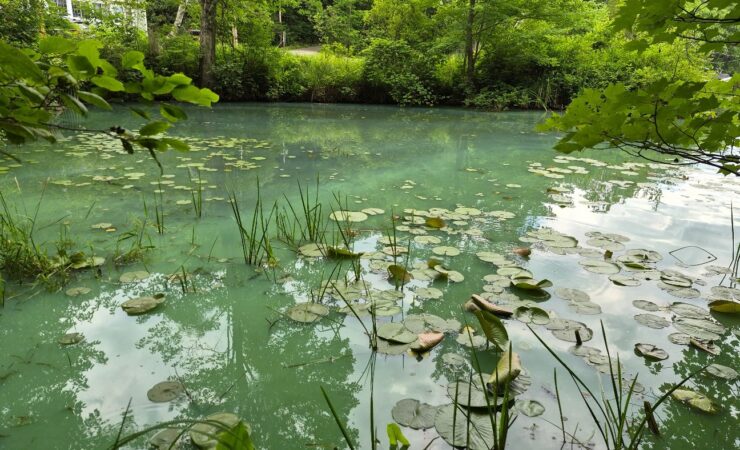
What Kind of Algae Is That?
July 10
Algae Update Summer 2026 So far, the lakes have remained nice and clear during the latest heatwave, but we are starting to see a measurable increase in algae growth. Not
Keep Reading
Remembering Kathi Wall
June 26
It is with great sadness that we share the passing of Kathi Wall, founding Executive Director of the Maine Lakes Resource Center, the organization whose merger with the Belgrade Regional
Keep Reading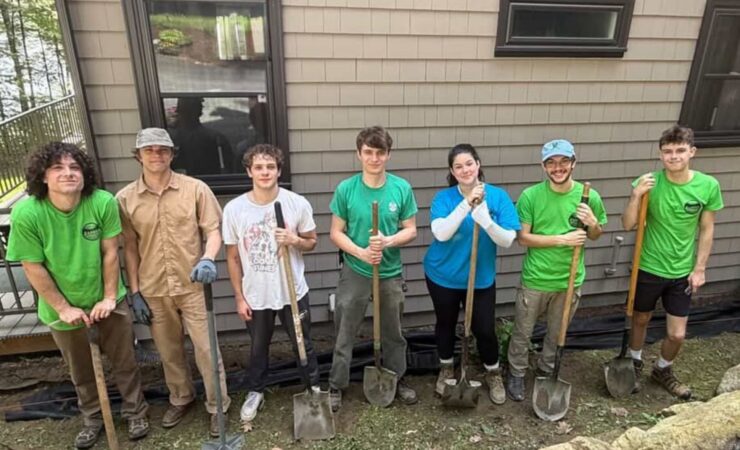
Scaling Summer Conservation Efforts
June 26
Meet the summer crew protecting our watershed Planning a paddle, hike, or swim in Belgrade Lakes? The summer you love starts with healthy lakes and lands, and they do not
Keep Reading
Inaugural 7 Lakes Alliance Arts Residency Announced
May 7
7 Lakes Alliance has launched the 7 Lakes Alliance Artist Residency, a new initiative that uses art to deepen public awareness of lake ecology and conservation. Through their work, resident artists will create experiences that engage community members of all ages in understanding and addressing environmental challenges facing the watershed, including the spread of invasive aquatic plants that threaten lake health.
Keep Reading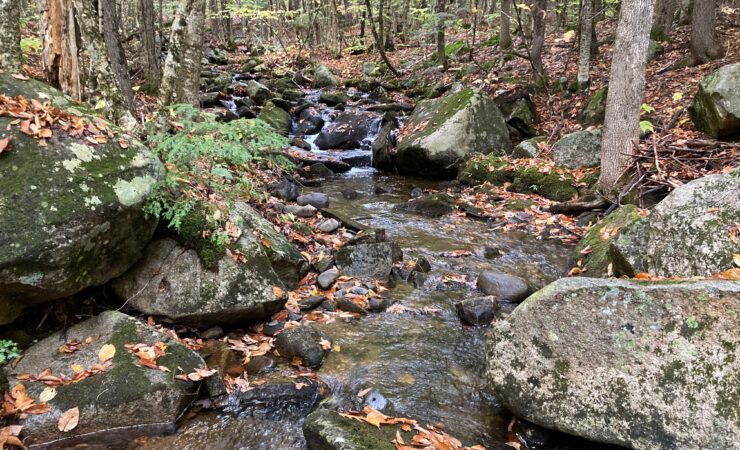
Denny Phillips Legacy Forest Permanently Protected
April 28
7 Lakes Alliance permanently protects Denny Phillips Legacy Forest 7 Lakes Alliance has permanently protected the Denny Phillips Legacy Forest, a 200-acre conservation area that serves as a critical ecological
Keep Reading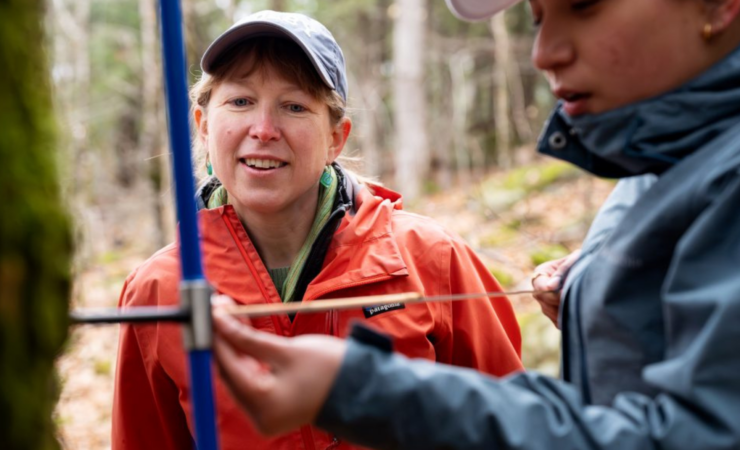
A Win for Belgrade Lakes Watershed
April 9
172 Acres of Old-Growth Forest Permanently Protected BELGRADE, Maine —Associate Professor of Earth Sciences Bess Koffman and Colby College students confirmed an old-growth forest on the eastern shore of Long
Keep Reading