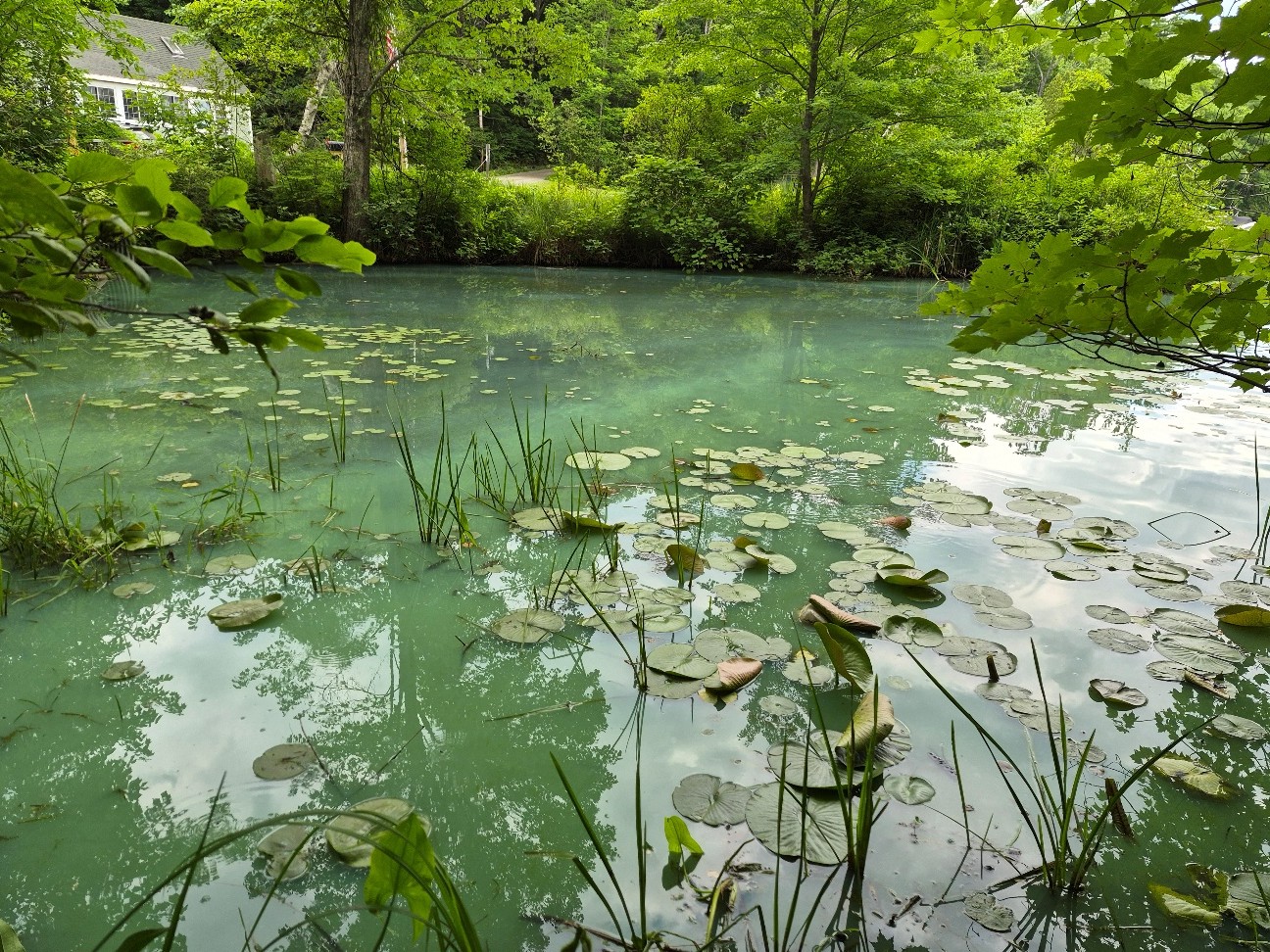
A scummy accumulation of cyanobacteria Gloeotrichia and Dolichospermum in a cove of Great Pond, July 9, 2026
Algae Update Summer 2026
So far, the lakes have remained nice and clear during the latest heatwave, but we are starting to see a measurable increase in algae growth. Not all algae growth is a concern though. Here are several ways to determine what kind of algae you see as we wade into the hottest time of year.
First, if you want to check whether you see cyanobacteria, you can capture an algae sample in a jar and store it in the dark. After a day, cyanobacteria will float on the surface, while the rest will settle on the bottom. Of course, you can always bring a sample to the 7 Lakes Alliance office in Belgrade or contact [email protected] or [email protected].
Types of Algae
Cyanobacteria are the most common type of algae that grows excessively in the Belgrade Lakes. Also referred to as “blue-green algae”, cyanobacteria are colonial, single-celled microorganisms that can form lake-wide algae blooms when conditions are favorable, like hot air temperatures and an abundance of phosphorus (the key nutrient for all algae in our lakes). Cyanobacteria can release compounds that are toxic to humans and pets. Because of this, the Maine DEP refers to lake-wide blooms where water clarity drops below 2 meters (6.6 feet) as “harmful algae blooms”, or HABs. We regularly test algae scums for toxins each year, and while we have never had a positive test, we recommend using caution and common sense when looking to swim! Our recommendation is to avoid contact with the water if you cannot see your feet when entering the lake, and to stay out of dense scum accumulations. Particularly, keep children and pets out of scums, as they tend to swallow more water when they swim.
Gloeotrichia echinulata (“Gloeo”) is a type of cyanobacteria that shows up each summer on Great Pond, Long Pond, and sometimes Messalonskee Lake. Gloeo forms large (~2 mm) spherical colonies that you can see with your naked eyes with a faint ring around their edge. Usually confined to deep, clear lakes, Gloeo emerges from the sediment and rises to the surface where it can spread horizontally across the entire lake. Gloeo can accumulate in coves and create thick scums.
Dolichospermum (“Doli”) is another common culprit of our lake-wide algae blooms, most recently on North Pond in 2024. Doli, along with other common cyanobacteria like microcystis, aphanizomenon, woronichinia (and more!) occur in all of our lakes each summer, but not usually in high abundances.
Other Algae Accumulations
It is very common to see patches of algae floating around in otherwise very clear areas. These masses are often a type of filamentous green algae which grows in shallow, vegetated areas of lakes that can break loose or accumulate into larger mats. While they might pick up other detritus along the way and can sometimes look unappealing, they are generally not a concern, unlike a lake-wide algae bloom or scum accumulations in a cove.
For more information, please contact Lake Scientist Matt Farragher or visit 7 Lakes Alliance at 137 Main St., Belgrade ME.
Email Matt

Matt Farragher
Lake Scientist
Don’t Be That Boater
August 28
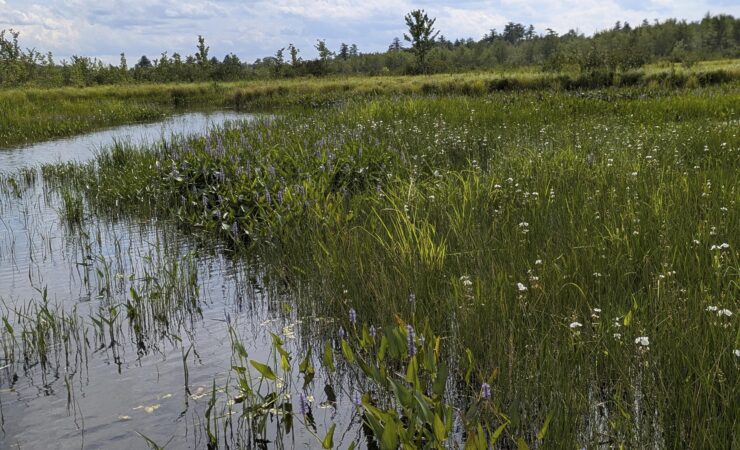
Update from Sharon Mann, 7 Lakes Alliance Invasive Aquatics Diretcor August 28, 2026 Recently, I paddled down Great Meadow Stream to conduct a routine survey for the few remaining, scattered
Keep Reading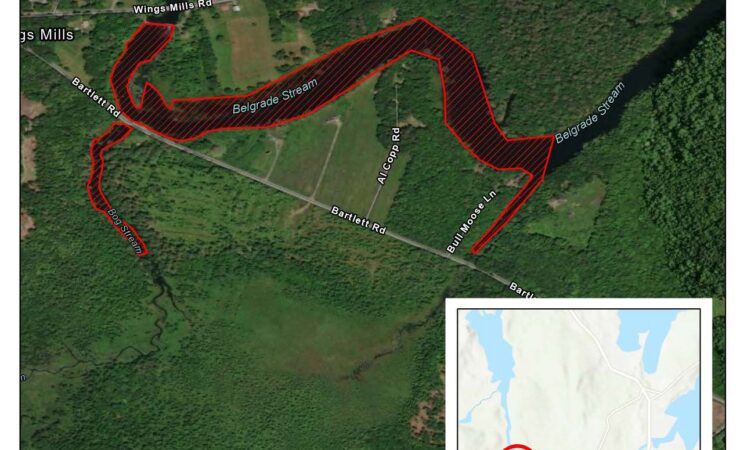
The Start of Something Good
August 25
We are pleased to share that on August 31, a small portion of Belgrade Stream will be treated with a low-risk herbicide to reduce invasive variable-leaf milfoil, lower the risk
Keep Reading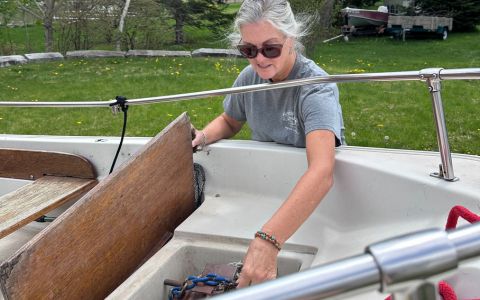
The Importance of Clean, Drain, Dry
July 22
Maine’s lakes and rivers are public waters, providing everyone with the opportunity to enjoy boating, fishing, swimming, and paddling. With that privilege comes a shared responsibility to protect these waters
Keep Reading
Remembering Kathi Wall
June 26
It is with great sadness that we share the passing of Kathi Wall, founding Executive Director of the Maine Lakes Resource Center, the organization whose merger with the Belgrade Regional
Keep Reading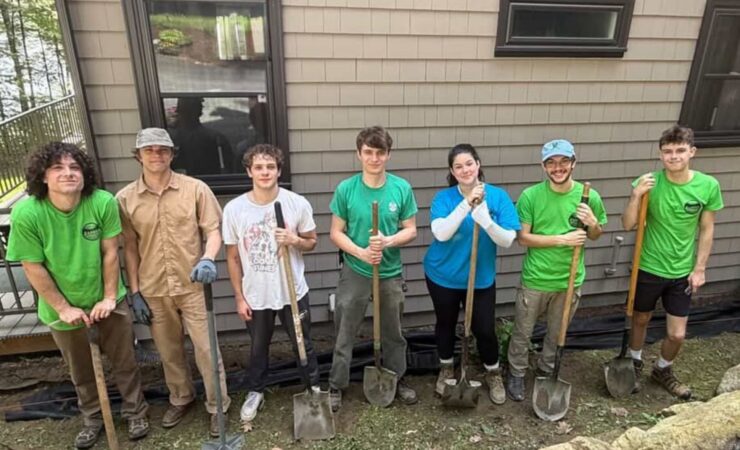
Scaling Summer Conservation Efforts
June 26
Meet the summer crew protecting our watershed Planning a paddle, hike, or swim in Belgrade Lakes? The summer you love starts with healthy lakes and lands, and they do not
Keep Reading
Inaugural 7 Lakes Alliance Arts Residency Announced
May 7
7 Lakes Alliance has launched the 7 Lakes Alliance Artist Residency, a new initiative that uses art to deepen public awareness of lake ecology and conservation. Through their work, resident artists will create experiences that engage community members of all ages in understanding and addressing environmental challenges facing the watershed, including the spread of invasive aquatic plants that threaten lake health.
Keep Reading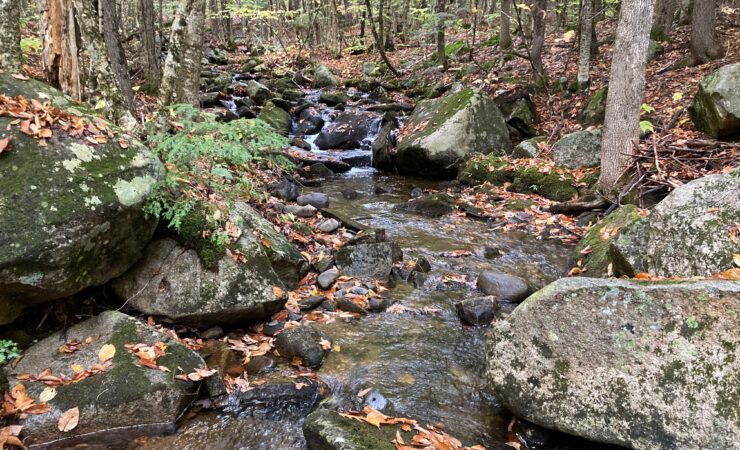
Denny Phillips Legacy Forest Permanently Protected
April 28
7 Lakes Alliance permanently protects Denny Phillips Legacy Forest 7 Lakes Alliance has permanently protected the Denny Phillips Legacy Forest, a 200-acre conservation area that serves as a critical ecological
Keep Reading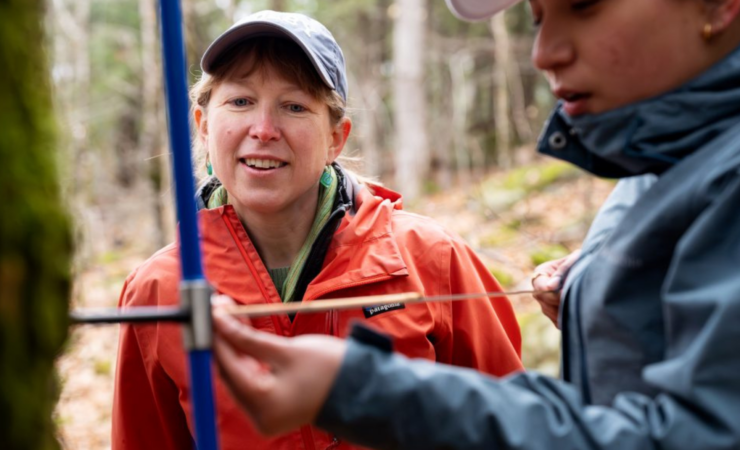
A Win for Belgrade Lakes Watershed
April 9
172 Acres of Old-Growth Forest Permanently Protected BELGRADE, Maine —Associate Professor of Earth Sciences Bess Koffman and Colby College students confirmed an old-growth forest on the eastern shore of Long
Keep Reading